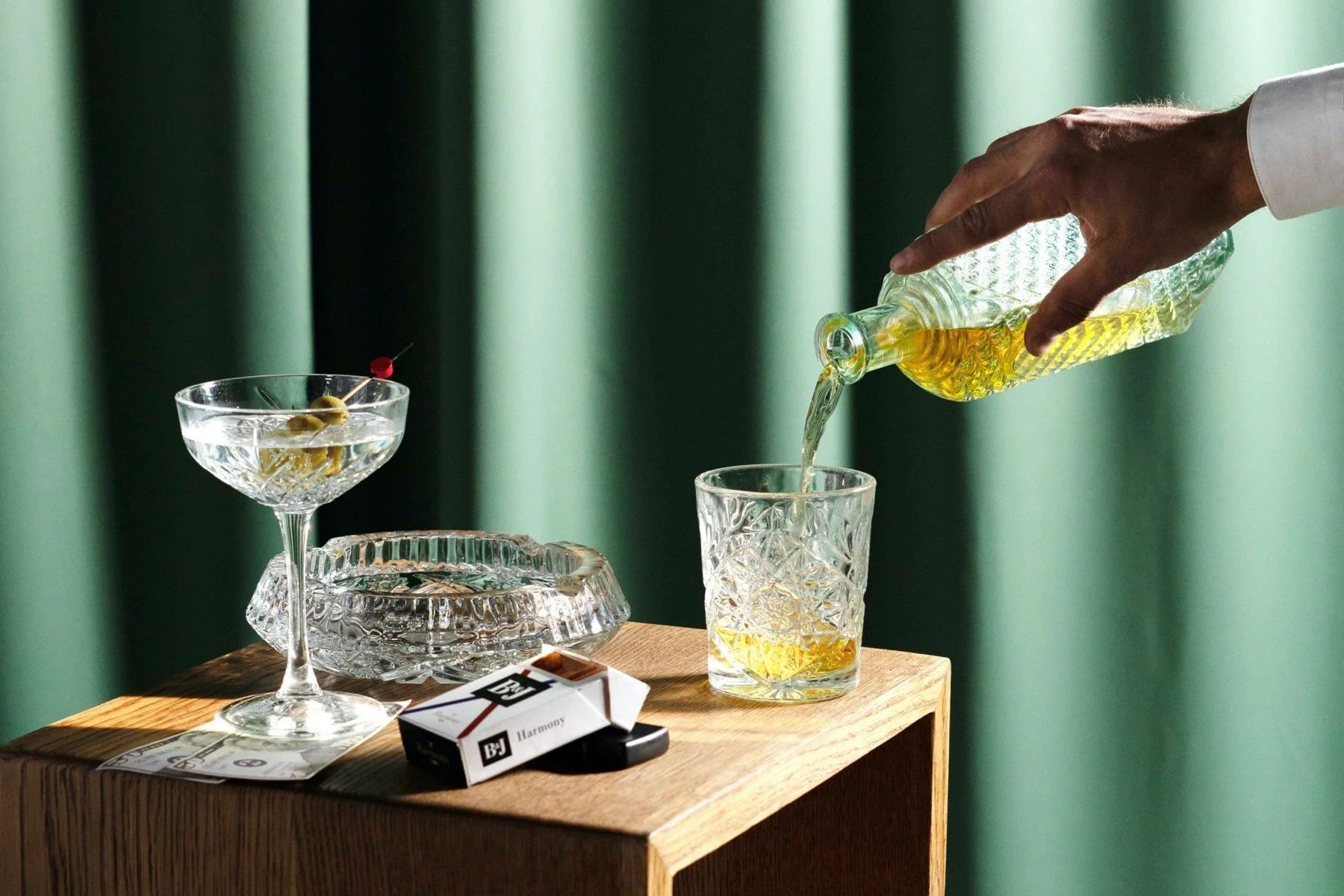
1. Think Excess, But Make It Controlled
A Gatsby-inspired setting calls for abundance — but never chaos. Art Deco geometry, metallic accents, and deep contrasts should define the space. Black, ivory, gold, and silver form a timeless foundation. Add shine through reflective surfaces, crystal glassware, mirrored trays, or sculptural lighting.
Lower the lights. Let shadows do some of the work. Pearls draped casually, feathers placed with restraint, and subtle sparkle will create an environment that feels seductive rather than theatrical. Every element should suggest luxury without shouting.
2. Drinks Should Feel Like a Celebration
Prohibition may be part of the myth, but indulgence was the reality. Keep the drink selection intentional and elegant. Champagne in coupe glasses sets the tone instantly — minimal effort, maximum effect. For cocktails, think classics with character: gin-based drinks, bourbon, citrus notes, or anything with a frothy, vintage finish.
Balance indulgence with care. Water should be visible, accessible, and styled beautifully. True hosts know that elegance includes consideration.
3. Serve Food That Encourages Movement
This is not a seated dinner — it’s a night of conversation, motion, and flirtation. Small bites allow guests to circulate effortlessly. Elevated classics work best: deviled eggs, bite-sized sandwiches, pastry-wrapped hors d’oeuvres, or refined takes on traditional comfort foods.
Food should support the night, not interrupt it.
4. Dress Codes Should Inspire, Not Intimidate
A Gatsby-inspired evening is an invitation to dress with intention. Encourage guests to interpret the era through a modern lens.
For women: fluid silhouettes, drop waists, embellishment, fringe, or sequins — paired with bold lips, sculpted waves, pearls, or statement accessories.
For men: tailoring is key. A sharp suit, tuxedo, suspenders, or pinstripes all work. Details matter — polished shoes, cufflinks, a watch, slicked hair. Precision over costume.
Make the dress code clear but liberating. The goal is confidence, not reenactment.
5. Let the Music Set the Mood
Sound defines memory. Jazz from the 1920s provides authenticity, but modern interpretations or jazz-inspired tracks can bridge past and present seamlessly. Big band rhythms, swing influences, or sultry instrumental tracks keep the energy sophisticated and alive.
If the mood strikes, movement should feel spontaneous — not choreographed.
6. Invitations Are the First Impression
Before guests arrive, the tone must already be set. Invitations should reflect restraint, glamour, and intention. Art Deco influences, geometric lines, and refined typography communicate elegance immediately.
Keep the wording concise. Include date, time, location, and dress code — no clutter. A sense of mystery is more powerful than over-explaining.
7. Language Matters
Use words that evoke atmosphere: glamour, midnight, champagne, velvet, after dark. A touch of playful, old-world slang can add charm, but subtlety is key. This is not nostalgia — it’s a reinterpretation.
Call it a Gatsby night, a Roaring Twenties soirée, or simply an evening after dark. The name matters less than the feeling it creates.