Inside Fashion Design
Fashion design is not simply the act of making clothes. It is the practice of translating ideas, culture, and beauty into form. At its core, it combines aesthetics, proportion, construction, and sensitivity to the body — shaped by time, place, and human behavior.Fashion evolves because people do. What we wear reflects how we move, work, celebrate, and express identity. Each era leaves its mark through silhouette, fabric, and attitude. Design is the silent record of these shifts.A fashion designer creates garments and accessories — from dresses and tailoring to shoes, bags, and jewelry — but more importantly, a designer creates point of view. Some specialize in a single category, while others work fluidly across disciplines. The scope varies, but the responsibility remains the same: to bring intention into material form.Paths Within Fashion Design
Fashion designers generally work in two primary ways.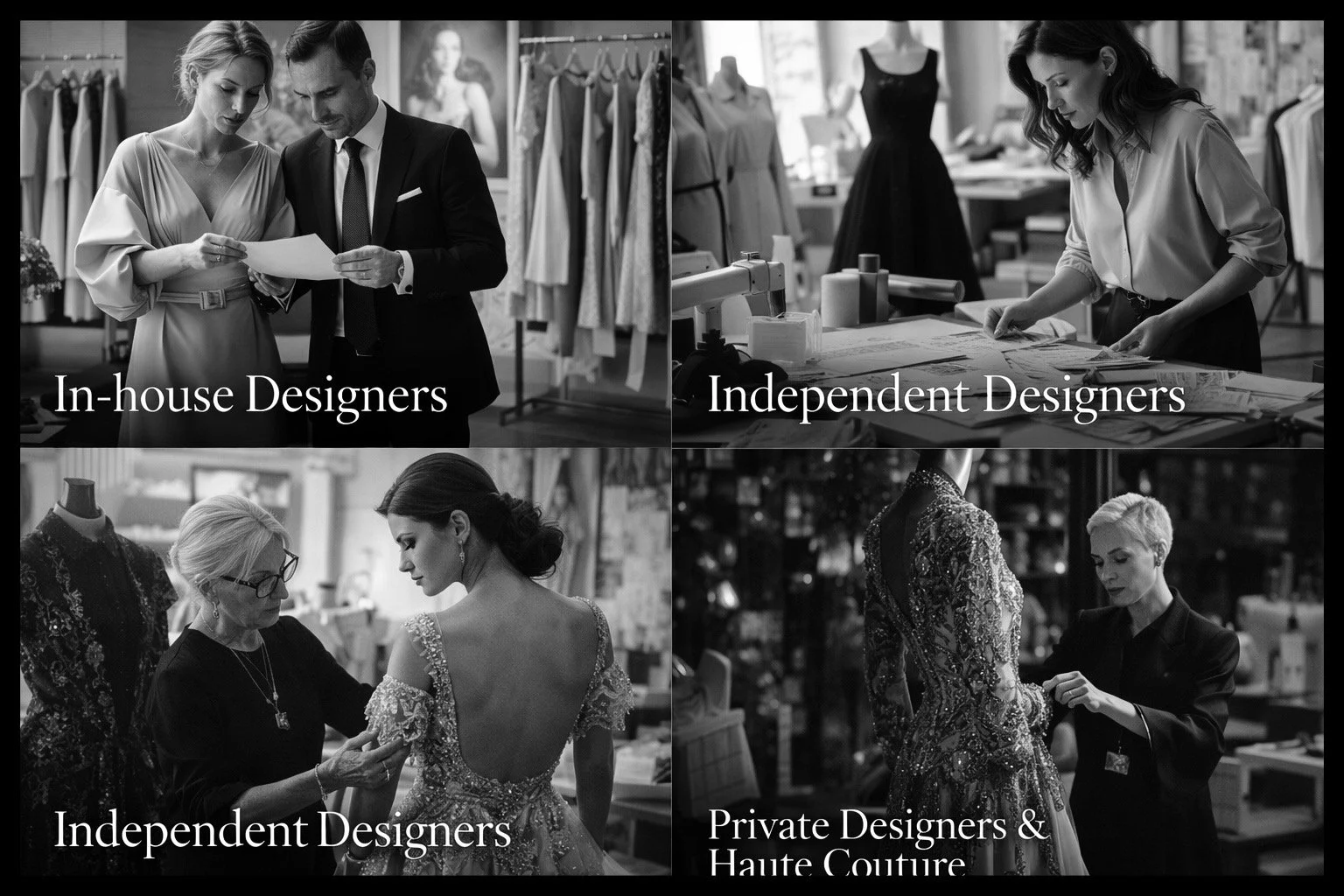
In-house designers
In-house designers are embedded within established fashion houses or brands. They design within a defined identity, translating the brand’s vision into seasonal collections while respecting its codes, audience, and commercial direction.Independent designers
Independent designers operate under their own names or labels. They develop collections independently, oversee creative direction, and collaborate with manufacturers to bring their work to life. This path requires not only creativity, but clarity — understanding market positioning, production realities, and the audience they are speaking to.Beyond these structures, some designers work privately, creating wardrobes for individuals, performers, or public figures. In haute couture, designs are produced through highly specialized ateliers, where craftsmanship, precision, and handwork define the final result. Even within large brands, while teams execute the work, the creative direction ultimately reflects the vision of the house.What a Collection Represents
A collection is not a group of random garments. It is a system.Each collection is built around a central idea — a mood, a reference, a question — expressed across multiple pieces. Designers must consider the wearer, the cultural moment, seasonal relevance, and the existing landscape of fashion. A successful collection feels cohesive without repetition, distinctive without excess.In both couture and ready-to-wear, collections shape how trends move through the industry. They create rhythm. They signal change.The Process of Designing Clothing
Design begins in different ways. Some designers sketch, allowing ideas to emerge through line and proportion. Others drape fabric directly on a form, letting the material guide the silhouette. Both approaches require discipline and understanding of the body.Once a design is defined, pattern making translates vision into structure. This stage determines fit, balance, and movement — and is often where a garment succeeds or fails. Precision matters.A prototype is then constructed and fitted on a live model. Adjustments follow, refining proportion and comfort until the design reaches its final form. Fashion design is rarely instant. It is a conversation between idea, material, and reality.